Showing posts with label richelleluzcorinne. Show all posts

Tuesday, December 1, 2015

Halika, Kain Tayo!

For the great finale of this funny, wonderful, totally amazing blog, we decided to do a legitimate study on one of the five senses in the body: taste.

A lot of research goes into food. This is typical, as food is one of the basic human necessities. From childhood, the four basic tastes taught by the basic education system is: sweet, sour, salty, and bitter. There’s a new taste in town however, and it’s called umami. It’s still a little bit controversial, in the sense that some people still refuse to recognize it as a basic taste. Umami is a Japanese word, meaning savory.

Through these four basic tastes, a lot has been discovered. The chemicals that can provide these tastes, the taste receptors that recognize these tastes, and from which specific cortex the tastes are recognized in the brain. Perception psychology has contributed a lot to data regarding taste.

As psychology majors, it’s our job to be able to think up of new ways of researching for more data on food, like figuring out which factors or social constructs are able to affect the way we perceive food. After all, we Filipinos take pleasure in eating with others, even when all we have are two hands and one big banana leaf in front of us. Food just seems so much tastier with great company, which is why we never hesitate to go to the next fiesta spread or to go try new restaurants with the barkada. Eating with friends is a way to celebrate our ups and downs in life as well, whether it’s pigging out after passing a hard exam or comfort eating together after a bad breakup. Since previous research indicates that moods always affect your perception of things, we decided to research on the effect of mood and relationship closeness on taste perception, namely for the sweet taste in cookies.

A well-timed study, considering that Christmas feasts will be starting soon.

In our environment where everything happens, any event that catches our attention might influence and change our moods. Mood is a "general and pervasive feeling state that is not directed toward a specific target” (Wood, Saltzberg, and Goldstampt, 1990) which occurs as a response to situations that happen in the environment (Isen, 1984). On the other hand, relationship closeness is pretty similar to our concept of kapwa. It’s when our representation of the self or ‘me’ as being a part of our representation of others. So the higher the relationship closeness, the greater the overlap between the ‘self’ and ‘others’(Aron & Fraley, 1999).

Previous research has already shown that we tend to eat more when we’re around other people, especially if it’s people that we know (Hetherington, Anderson, Norton, & Newson, 2006). While that doesn’t necessarily mean that we taste differently when we’re around other people, research has also found that eating chocolate together with someone else enhances how much we like or dislike the chocolate (Boothby, Clark, & Bargh, 2014). As for mood, depressed people tend to taste sweetness and bitterness more intensely after feeling a positive or negative mood (Platte, Herbert, Pauli, & Breslin, 2013). But is this true even for the non-depressed?

For our experiment, we looked for 120 volunteers from the Psych 101 subject pool. Days before our actual data gathering schedule, we posted several sign-up sheets for an experiment entitled COOKIE MONSTER (we even drew a cute Cookie Monster on it) on a bulletin board near the classrooms hoping that the students would be interested in participating. Luckily, throughout our data collection we did not have any problems looking for participants (in fact the challenge was how to accommodate all the students who wanted to walk-in). In the end we only had time and research participation credits for 124 participants but at least it's 4 more than our initial intended number.

cookiemonster1.jpeg
Cookie says Hi!
For our experiment, we looked for 120 volunteers from the Psych 101 subject pool. Days before our actual data gathering schedule, we posted several sign-up sheets for an experiment entitled COOKIE MONSTER (we even drew a cute Cookie Monster on it) on a bulletin board near the classrooms hoping that the students would be interested in participating. Luckily, throughout our data collection we did not have any problems looking for participants (in fact the challenge was how to accommodate all the students who wanted to walk-in). In the end we only had time and research participation credits for 124 participants but at least it's 4 more than our initial intended number.

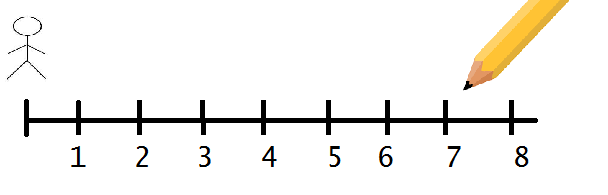
Upon arrival outside the experiment room, we asked the participants if they came with a friend or if they signed-up for a solo/stranger slot. Of course, being the sigurista experimenters that we were, we re-checked and quantified the relationship levels of the participants using both a qualitative (small talk while waiting for their turn) and a quantitative method (Person Scale & Interpersonal Solidarity Scale which was administered in the middle of the experiment).

Our actual experiment involved 8 phases that would take about 20-30 minutes in total. A pretty good cover-up story was also used to divert the attention of the participants from guessing our real research objective and to justify the fact that they had to eat the cookies provided while inside the room. Don’t worry; we debriefed our participants before letting them go so there was no harm done besides that of the minimal deception.

We told our participants that we wanted to see how a shared experience, like watching a video, affected their perceived closeness to each other. The mood scales were there, we said, just so that we could check if they were feeling any extreme emotions that could affect the results. As for the cookies, they were told that they were actually free cookies provided by our sponsors!

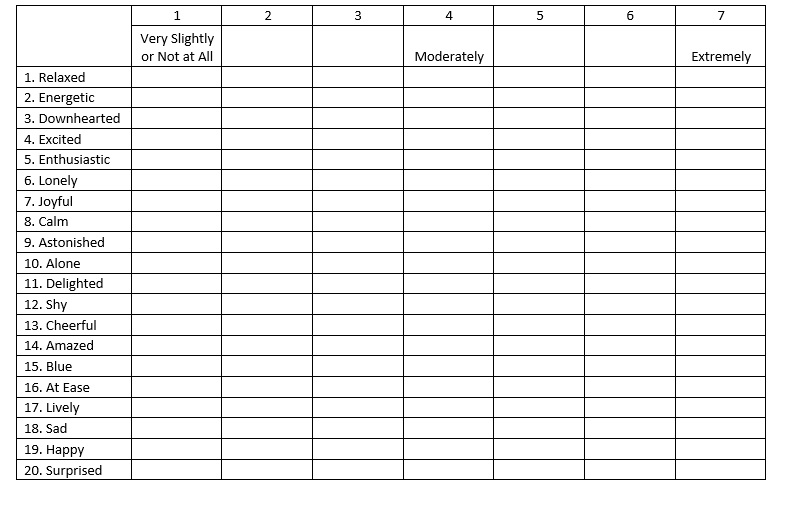
Anyways, going back to the experiment procedures, the first thing we did upon the arrival of the participants was to give them a consent form and to instruct them about what they would do. Once they agreed to participate, we administered the PANAS-X test to determine a baseline of their moods. Since in this research we are looking at the effects of mood and relationship closeness on taste perception, after they have answered the aforementioned scale, we presented them with either a happy video or a sad video to alter their moods. For the happy condition, we used one of the impossible challenges try not to laugh videos you can find in YouTube. In the same way, we used 2 Thai insurance commercials (those that make the ninjas inside the room cut onions…) from YouTube to induce the sad mood. Ok, so now the question is whether the videos worked. Statistical analysis showed that the videos were effective, so effective in fact that during the experiment the participants were either laughing their hearts out or trying to stifle their tears.

Impossible Challenge
My-Dad-is-a-Liar-Emotional-Commercial.jpg
My Dad is a Liar
1241.jpg
Silence of Love
      
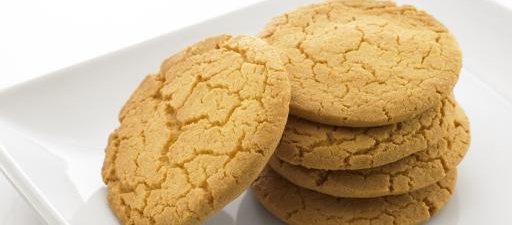
So now comes the cookie. Each participant was given one cookie to eat while they watch the video. The cookies provided were homemade and baked the day before the experiment. We altered a cookie recipe readily available online to make them taste less sweet and we removed the chocolate chips and nuts so as to make the cookies as simple as possible. You can find the actual recipe we used to for the cookies before the references part of this blog. You guys should try it sometime especially if you are fond of not too sweet desserts.

PANAS v. 1
Once the participants have finished watching the videos (and ideally eating the cookie), they were given the Interpersonal Solidarity Scale and the “Person Scale” to quantitatively measure the participant’s closeness. Then the participants were asked to answer the PANAS scale again but in a different presentation so as not to make them realize that they are answering a form identical to the one given previously. Finally they were asked for feedback on the video and the cookie.

PANAS v. 2
*Would you believe that these two are actually identical?
The Person Scale

When we searched the vast ocean of research, we found several studies that stated being happy increased the perception of sweetness (Boothby, Clark, & Bargh, 2014;Platte, Herbert, Pauli, & Breslin 2013). Unfortunately, it was not to be. There are, after all, other studies that did not obtain a significant perception of sweetness (Dichter et al., 2010), and ours happened to be one of them. Perhaps Filipinos are just so accustomed to sweet cuisine, that it affected our perception of sweetness.

We did find some pretty interesting (and sometimes unexpected) results though. In fact, there was a positive effect of mood induction and relationship closeness on bitterness. This means that those who felt happy and were with a friend actually sensed bitter tastes more accurately. As unusual as it may seem, we also found out that individuals who are with their friends perceived sourness when the positive mood is induced. This might be because an enhanced state of arousal when mood was induced. A similar case happened in Platte, Herbert, Pauli, & Breslin’s (2013) study, wherein they obtained significant sourness scores for both happy and sad conditions! We postulate that while arousal does happen when one is happy or sad, one may become more aroused when happy as compared to sad. There was also an significant interaction between relationship closeness and mood, which affected sour scores. In a way, this wasn’t all that surprising. We do tend to experience greater feelings of excitement when other people are around, especially when they’re people we know.

There still seems to be a long road ahead. Sometimes sweetness doesn’t significantly increase when we’re happy. Maybe we tend to be more sensitive to bitterness when we’re with a friend. Either way, we must continue to search for the tasty truth.

Cookie Recipe
Ingredients:
  2 ¼ cups all purpose flour
  ½ teaspoon baking soda
  ½ teaspoon salt
  1 cup softened butter
  ¾ cups granulated sugar
  ¾ cups packed brown sugar
  1teaspoon vanilla extract
  2 large eggs

Combine flour, baking soda and salt in a small bowl. Beat butter, granulated sugar, brown sugar and vanilla extract in a large mixing bowl until creamy. Add eggs, one at a time, beating well after each addition. Gradually beat in flour mixture.  Drop by rounded tablespoon onto ungreased baking sheets. Finally bake for 9 minutes or until golden brown.

References:

Aron, A., & Fraley, B. (1999). Relationship closeness as including other in the self: Cognitive

underpinnings and measures. Social Cognition, 17(2), 140–160.
doi:10.1521/soco.1999.17.2.140

Boothby, E. J., Clark, M. S., & Bargh, J. A. (2014). Shared experiences are amplified.

Psychological science, 25(12), 2209-2216.

Hetherington, M. M., Anderson, A. S., Norton, G. N. M., & Newson, L. (2006). Situational effects on meal intake: A comparison of eating alone and eating with others. Physiology & Behavior, 88(4-5), 498–505. http://doi.org/10.1016/j.physbeh.2006.04.025


Isen, A. M. (1984). Toward understanding the role of affect in cognition. In Sedikides, C. (1992). Changes in the Valence of the Self as a Function of Mood. Personality and Social Psychology Review, pp. 271-311


Platte, P., Herbert, C., Pauli, P., Breslin, P. A. S. (2013) Oral perceptions of fat and taste stimuli are modulated by affect and mood induction. PLoS ONE, 8(6):e65006. doi: 10.1371/journal.pone.0065006


Wood, J.V., Saltzberg, J.A., & Goldstampt, L.A (1990). Does affect induce self-focused attention? In Sedikides, C. (1992). Changes in the Valence of the Self as a Function of Mood. Personality and Social Psychology Review, pp. 271-311


Photo Credits:


[Photo of a painting of a Filipino family having dinner]. Retrieved from http://static.squarespace.com/static/5411d80ae4b02fc94fefce4a/5457e7a5e4b06c364300fd00/5457e901e4b06c3643013042/1291127341000/G00003.jpg?format=original

Monday, October 19, 2015

Hearing What You See || Seeing What You Hear


Eyes vs. Ears

I have previously thought that visual information almost always predominates over all other senses. In fact when you think about it, we constantly receive salient visual information as long as our eyes are open, which is technically almost all our waking hours. We depend on our eyes so much and rightfully so because it us one of our more developed sense organ. Nonetheless our eyes are not foolproof. They can be easily fooled by the simplest optical illusion. But another proof that our eyes are susceptible to errors, and perhaps something relatively unknown to most people, is that our eyes can be fooled by our ears. This is known as the Sound Induced Visual Motion Perception.

When I first heard/read of this, my initial reaction was “what is that, too many big words!” But then dissecting the term showed me that it is actually fairly simple. When we hear certain arrangements of sounds (sound induced) we sometimes see visual stimulus as moving despite the lack of actual movement (visual motion perception).

Two notable studies on this topic include one entitled “Auditory Motion Information Drives Visual Motion Perception” published online in 2011, and a 2013 study, “Effect of Pitch-Space Correspondence on Sound-Induced Visual Motion Perception”. Both papers were written mostly by Japanese authors and major contributions on both papers were made by Souta Hidaka and Wataru Teramoto. 

Visual Stimulus + "Moving" Sound = Mind Tricked
Amazing, right? (haha!)
Most people will be creeped out to know that they sometimes see movement where there is none. If this happens, some may even think that they are hallucinating or that something is haunting them. Little do they know that simply adding the right combination of sounds to a particular visual stimulus will trick your mind into seeing movement.

Let us now look at the two studies mentioned above in greater detail. The earlier research published in 2011 found out that a smooth sound moving either from the left or the right to the opposite direction induced movement perception of a non-moving object located outside the focus of the eye. This effect also increases as the object is moved to a more peripheral area. So generally, it means that an object seen using your peripheral vision will appear to move when accompanied by a sound moving from left to right or right to left. Furthermore this effect is so strong that people cannot distinguish whether movement of the object in their periphery was just an illusion brought about by the introduction of the sound or if there was actual movement (Hidaka, Teramoto, Sugita, Manaka, Sakamoto, & Suzuki, 2011).

Did it move?

The second study is somewhat similar to the first except that it took into consideration pitch and alternating up/down located sounds.  In this experiment, the researchers determined that hearing up/down sounds can give the impression that an object located in the periphery is moving (similar to the findings for left/right sounds). In the case of pitch, they found out that it did not affect visual motion perception before exposure however, after associating a pitch with a visual apparent motion, a change in pitch resulted to seeing the object move(Hidaka, Teramoto, Keetels, & Vroomen, 2013).

I know this is hard to believe. Your eyes and ears working together to play tricks on you? No way! Besides, where would you even encounter something like that in real life. Outside of the laboratory setting, most sounds accompany motion and most movements are accompanied by sounds. They are not isolated especially when looking at it using physics. Nonetheless these two researches show how we integrate the information coming from our senses, particularly vision and hearing, and it proves that our senses indeed work together (for us, or against us) in order to interpret what we perceive. 

So now the question is,

Better yet, let me ask

Because sometimes, they sure are playing tricks with our brains...   


References:

- Hidaka, S., Teramoto, W., Sugita, Y., Manaka, Y., Sakamoto, S., & Suzuki, Y. (2011). Auditory Motion Information Drives Visual Motion. PLoS ONE , 6 (3), 1-9.

- Hidaka, S., Teramoto, W., Keetels, M., & Vroomen, J. (2013, September 11). Effect of Pitch-Space Correspondence on Sound-Induced Visual Motion Perception. Experimental Brain Research.

Image Sources:

1. Minions
http://orig15.deviantart.net/8575/f/2013/340/a/1/see_no_evil_hear_no_evil_speak_no_evil_by_dincenzo-d6x0848.jpg
2. Candace
https://s3.amazonaws.com/rapgenius/candace_hallucinating_by_osopod2-d3gnl79.gif
3. Confused
http://www.revelationtv.com/images/uploads/thumbnails/news/confused-by-credit.jpg
4. Trust Eyes
http://i.ytimg.com/vi/ZflIMBxyIak/maxresdefault.jpg
5. Trust Ears
 http://i.ytimg.com/vi/kzo45hWXRWU/maxresdefault.jpg

Monday, September 28, 2015

The Taste and Scent of Rainbows


Do you recall your early years in grade school when your science teacher would ask you the five basic senses and then your whole class would reply in unison with “sight, smell, hearing, taste and touch”? Those truly were the good old days when everything was plain and simple. We were taught how our senses perform their tasks independently and there was little mixing between them aside from those that are obvious and readily observable.

But we know through experience that we interpret our environment based on the collective information that our senses detect. We recognize how our sense of smell and sense of taste go together; in fact we can observe this personally whenever we have a really bad cold. Then you can also say that vision and hearing are connected especially when observing moving objects. But what about our vision and smell, or vision and taste, are they even remotely connected? Can we actually know the color of scents and taste?

Low Sensitivity Sense of Smell... Yikes!
Unlike the data from our other senses that need decoding, the information we get from out sense of smell goes directly to the cortex of our brain for immediate processing. This, however, does not mean that our sense of smell is the fastest among all the senses that we have. In fact it requires about 400 ms before we can detect smells, which is 10x slower than our vision (Herz & Engen, 1996 as cited in Morrot et al). Moreover our sense of smell is relatively weak compared to our other senses, which means that we actually use our other senses when we try to interpret odors and scents. Of course this is not a bad thing. It simply tells us that we use our other senses to compensate for the relative weakness of our noses and generally, we confirm what we smell by what our other senses observe. Problems, however, arise when signals that we detect with our other senses contrast with what we pick up with our nose (or as we can see in the picture above, when stronger scents like room fresheners can overpower foul smells, in that case we are unable to detect the weaker scent).

Back in 2001, Morrot and his colleagues conducted a very interesting study on the interference between our sense of smell and our vision. This study, I guarantee, would interest wine enthusiasts out there for in this study, Morrot showed that even experts in wine tasting can be fooled by a simple odorless food color.

Wines, especially to the nose of the experts, have very distinct smell. According to the research white wine odor descriptors include floral, honey, citrus, apple, banana etc. while red wine odor descriptors include wooded, cherry, raspberry. When the wines are presented in the correct color, wine experts have no trouble describing the scents and flavors. In other words, red wines were given typical red wine descriptions and the same goes for white wines.

The question now is, would they still be able to distinguish the red wines from the white wines if they are all presented looking like red wines? Many would think that without a doubt wine experts would be able to distinguish the two for they are experts in their fields, but apparently this was not the case.

Sneaky, Sneaky...

Although the wine experts were asked to describe the given wines based on their scent alone, Morrot and his team observed that color indeed played a large role in the description process. White wines were consistently perceived as having red wine scents when they were artificially colored red. The color of the presented wine misled the experts in judging the scent and flavor of the wines. Moreover, this error happened more regularly in the presence than in the absence of access to the wine color (higher dependence on visual cues when contradicting pieces of information are presented).

This is consistent with the finding of previous researches where changing the green-ness and yellow-ness of a lemon flavored sugar solution changed people’s rating of its sweetness. Furthermore, Sakai showed that this perceptual illusion is not exclusive to wines. In a research he conducted in 2004 (as cited in Sakai, Imada, Saito, Kobayakawa, Deguchi, 2004), he found out that people tend to misjudge the flavor of sodas when presented in a color that is not typically associated with it (orange-flavored solution was correctly identified when it was colored orange but was misidentified as tea or grape flavor when it was colored dark brown).

These results however were not seen in a similar experiment by Ballester and colleagues (2009). They presented a total of 18 wines (white, red, and rose) in dark colored glasses to wine experts and wine novices and determined that both novices and experts were able to distinguish between red and white wines but not rose wines. This opposes the results produced by Morrot’s group that smell perception highly depends on color.

Which, then, among the results are the most accurate in describing our sense of smell? I don’t know for sure either. I for one believe that my smelling skill is highly influenced by what I see. I don’t have a good sense of smell or really sensitive taste buds so I can generally say that I partially taste and smell with my eyes (this is why I really feel queasy when watching the new colored ketchup advertisement). I imagine the blue ketchup tasting like blueberries or bubblegum while the green one like broccoli (and I don’t really think that those are good combinations).

Anyway, the difference between the results from Morrot’s and Ballester’s study may have been due to the fact that there was a significant difference in how they conducted the experiment. Morrot’s group actively manipulated the color of the wines presented whereas Ballester simply placed the different types of wines in dark tinted containers to prevent the wine assessors from judging based on color. Since we have the tendency to interpret scent signals in conjunction with other sensory information, we are inclined to look for other cues to confirm what we have detected using our sense of smell.  My speculation on this is that the participants in Ballester’s study may have focused more on the scent because of the ambiguity in color (all wines seen on a darkly tinted glass). Since the dark tinted glasses would ideally make the wines appear as if they were of the same color, there was minimal interference between the scent and the color of the wines (color, in that case, was not a good indicator of the type of wine presented). Whereas Morrot provided clear cues on the color of the wines, which may have given the assessors a clue to what type of wine was provided (although it was misleading information). In this case, the knowledge of the color of the wine directly influenced how the experts perceived the scents and maybe since vision is more sensitive than the sense of smell, the knowledge of the color took precedence oven the actual perceived scent.

I shall reinstate that the last few paragraphs are just speculations. So let me know what you think! Do you believe that color affects the way we perceive scents and tastes?

Sources:
Ballester, J., Abdi, H., Langlois, J., Peyron, D., & Valentin, D. (2009). The Odor of Colors: Can Wine Experts and Novices Distinguish the Odors of White, Red and Rose Wines? Chemosensory Perception , 2 (4), 203-213.

Morrot, G., Brochet, F., & Dubourdieu, D. (2001). The Color of Odors. Brain and Language , 79, 309-320.

Sakai, N., Imada, S., Saito, S., Kobayakawa, T., & Deguchi, Y. (2005). The Effect of Visual Images on Perception. Chemical Senses , 30 (1), 244-245.

Image Sources:
- Colored Soda
          http://pixel.brit.co/wp-content/uploads/2014/06/rainbow-soda-bar-645x4291.jpg
- 5 Senses
          http://cdns2.freepik.com/free-photo/_62147502195.jpg
- Febreze Social Experiment
          http://theinspirationroom.com/daily/experience/2012/6/febreze-breathe-happy-social-experiment.jpg
- Glass with Food Color
          https://buddyjournal.files.wordpress.com/2011/08/smoke-27in.jpg
- UFC Colored Ketchup
          https://fbcdn-photos-g-a.akamaihd.net/hphotos-ak-xpf1/v/t1.0-0/p480x480/10801588_1686858324883278_8425796780354854249_n.jpg?oh=792e49e2bf64579eebb81191c76dce41&oe=56A14B83&__gda__=1449448232_ac81b6aeddd8c16011091cd2c0a376f0